Department of Defense
Every UASFeed story on Department of Defense — across defense, counter-UAS, industry, commercial, policy, and tech, newest first.
-
Policy & Regulation
The Magnet Problem: How China’s Rare Earth Grip Threatens Every Drone on Earth
China controls 93% of global rare earth magnet manufacturing — the same magnets that spin every brushless motor in every military and commercial drone. When Beijing tightened export controls in 2025, the supply chain risk stopped being theoretical.
-
Tech & Builds
What Makes a Drone Swarm: True Autonomy, Enabling Tech, and the C2 Gap
Most formations called 'drone swarms' aren't—they're centralized fleets, scripted salvos, or teleoperated aircraft. Here's what true swarm autonomy requires, which programs are closest, and why C2 software remains the binding constraint.
-
Defense & Combat
Pentagon's Replicator Initiative: Thousands Promised, Hundreds Delivered
DoD's Replicator initiative launched in August 2023 with a promise to field multiple thousands of attritable autonomous systems within 18–24 months to counter China’s mass advantage. Two years on, hundreds have been delivered, the program has pivoted to counter-drone defense, and oversight gaps persist.
-
Counter-UAS
JIATF-401 Validates CACI SkyValor for Joint-Force-Wide Deployment After Yuma Border Testing
After a two-day live evaluation at MCAS Yuma announced June 7 with Joint Task Force-Southern Border and CBP, the Pentagon's consolidated C-UAS task force cleared CACI's SkyValor system for deployment at any U.S. military installation worldwide — not just the southern border.
-
Policy & Regulation
Is DJI Banned in the U.S.? A Precise Map of Six Overlapping Restrictions
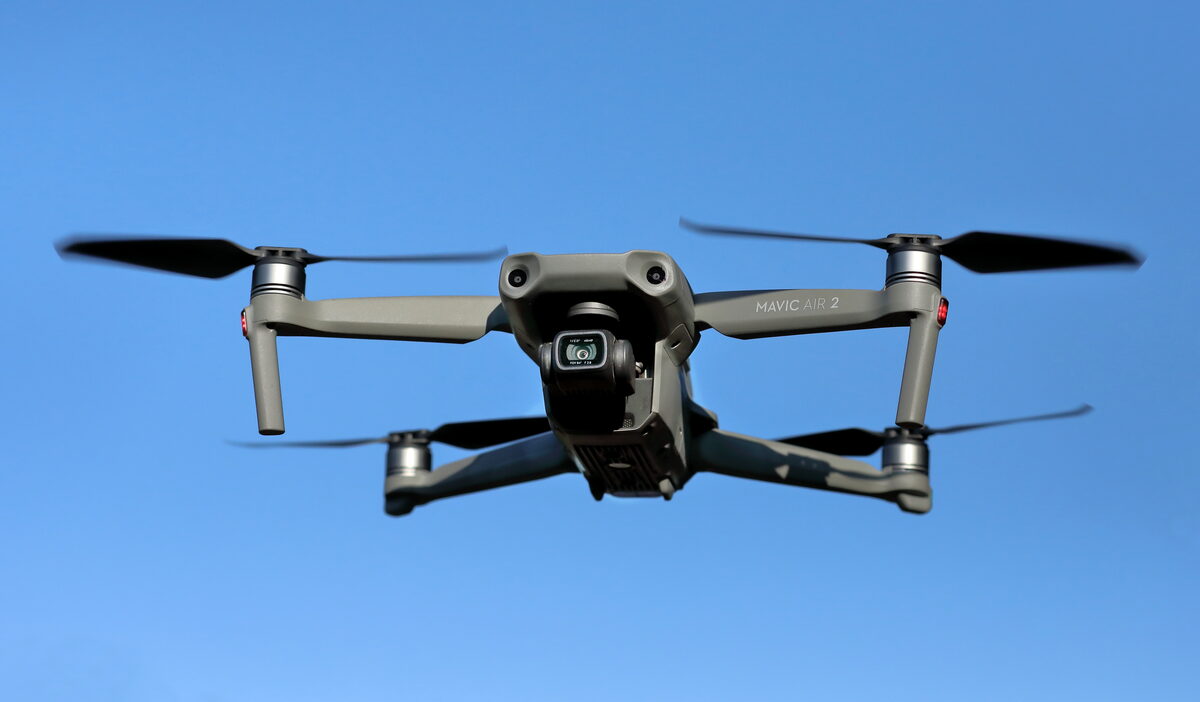
"DJI is banned" is both true and false depending on which of six distinct legal instruments you mean. This explainer maps each layer — export controls, federal procurement, the DoD blacklist, the FCC Covered List, state laws, and the BVLOS draft rule — with its exact scope and status as of June 2026.
-
Counter-UAS
Drone Jamming Explained: How It Works, Who Can Do It, and Where It Fails
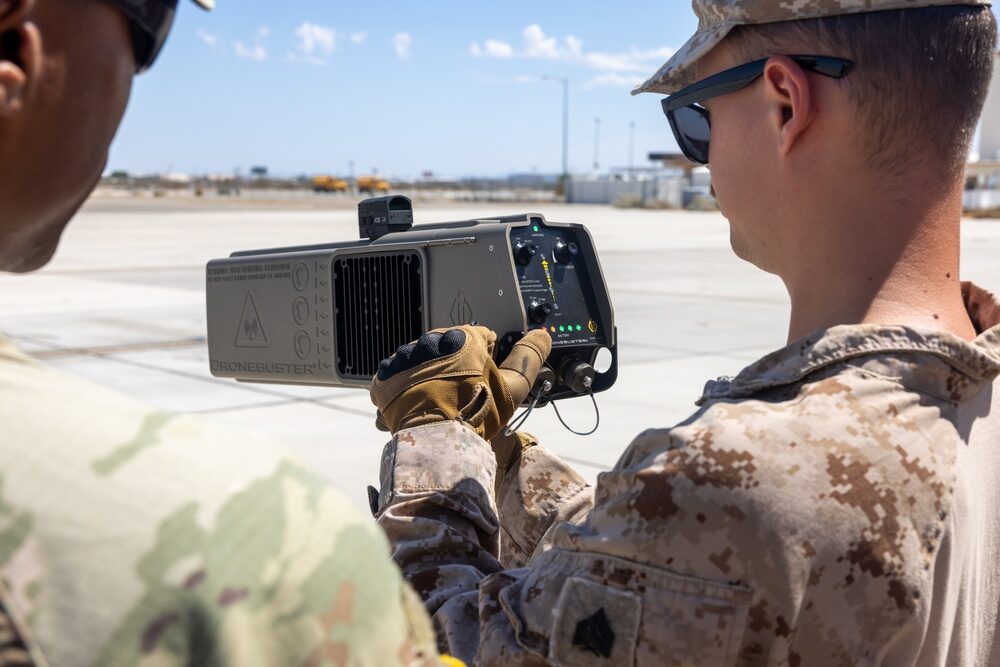
Electronic jamming neutralizes more drones in Ukraine than any other method — roughly 10,000 per month — yet the newest generation of fiber-optic and AI-navigation drones is immune to it. A technical and legal primer on the RF physics, the US arsenal, and why civilians and companies have zero legal authority to jam.
-
Defense & Combat
Loitering Munitions Explained: The Watching Weapon Reshaping Modern Combat
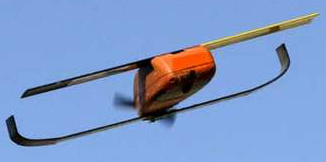
From Israel's 1989 Harpy to Ukraine's Lancet hunter-killer teams, loitering munitions fuse sensor and effector into a single expendable platform — a category distinct from both the cruise missile and the reusable drone, and now in procurement at scale across 50-plus countries.
-
Defense & Combat
DoD Drone Groups 1–5 Explained: The Classification That Governs Everything
The Pentagon's five-group UAS taxonomy determines who can buy a drone, which airspace it flies in, who is responsible for shooting it down, and what legal authorities apply. Here is how it works and why it is under strain.
-
Counter-UAS
Layered Counter-UAS Defense: How the Kill Chain Actually Works
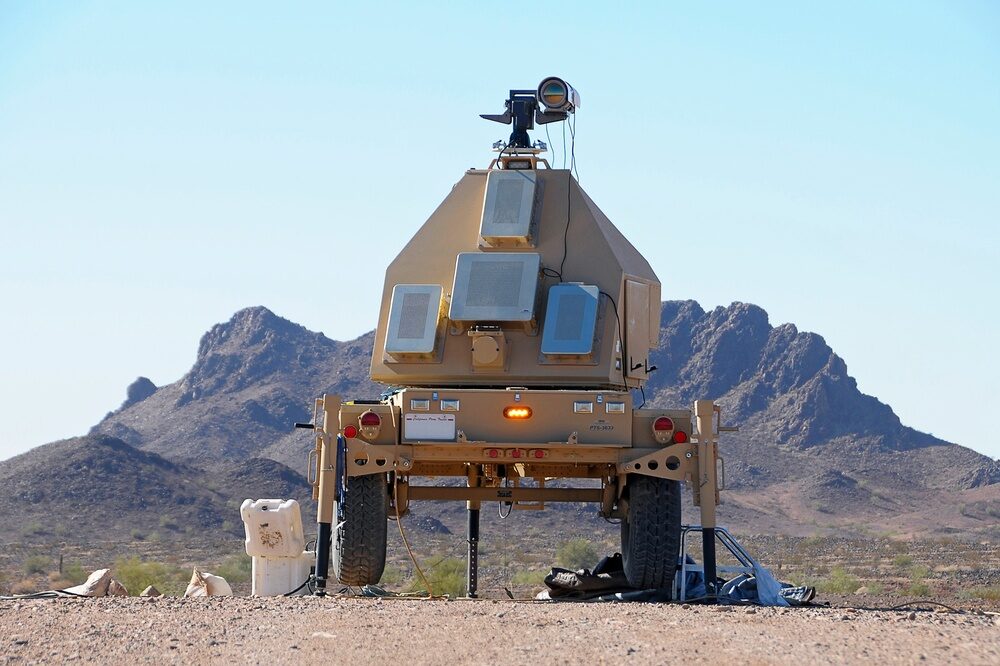
From Langley's 17 nights of unidentified drones to the Navy's billion-dollar Red Sea munitions bill, the pressure to build coherent counter-drone architecture has never been higher. Here is how the layers — detect, identify, decide, defeat — actually work, what each one costs, and why none of them works alone.
-
Defense & Combat
Senate NDAA Panel Wants a Four-Star Drone Command to Fix the Stovepipe Problem
The Senate Armed Services Committee's FY2027 NDAA includes a provision permitting a new Robotic and Autonomous Systems Combatant Command, a four-star headquarters with acquisition authority designed to end service-by-service drone silos — but it is a committee bill, not law.