Department of Defense
Every UASFeed story on Department of Defense — across defense, counter-UAS, industry, commercial, policy, and tech, newest first.
-
Industry & Contracts
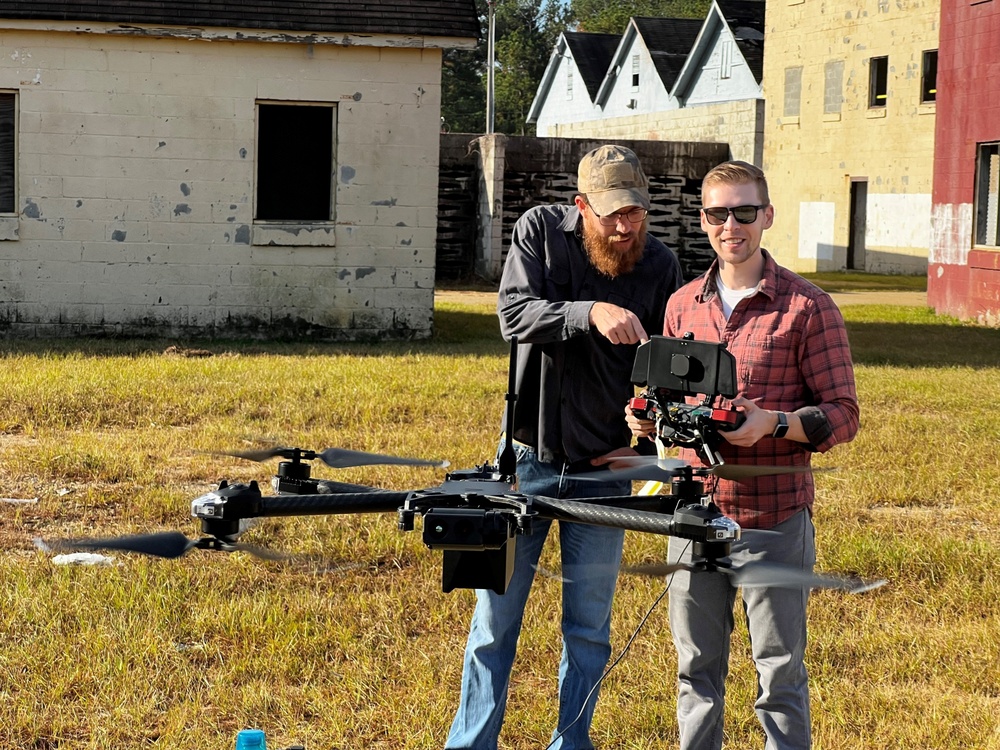
A Federal DJI Ban Just Cost One Oregon Police Department $18,000 a Drone — the Skydio Swap, Line by Line
Redmond, Oregon approved a $410,762, five-year financed Axon contract for six Skydio drones to replace its DJI fleet — a 3.5x price jump driven by the federal NDAA ban, not operational need.
-
Counter-UAS
AeroVironment Wins $500M Army Deal to Buy Commercial Counter-Drone Tech at Scale
The Army has handed AeroVironment a $500M, three-year ordering vehicle to buy layered commercial counter-UAS gear against Group 1-3 drones — a shift from bespoke buys toward a standing anti-drone pipeline.
-
Policy & Regulation
Drones as Plumbing: The House's FY27 NDAA Bets on Doctrine, Ranges, and a Common OS
The House's FY27 NDAA (H.R. 8800) pivots from buying more drones to building the scaffolding to run them — a common sUAS operating system, dedicated training corridors, formal autonomy doctrine, and new rules for AI that influences the use of force.
-
Policy & Regulation
Hegseth Names a Pentagon 'Drone Czar': New DRPM-UxS to Absorb Almost Every Unmanned Program
A June 29 Hegseth memo creates a Direct Reporting Portfolio Manager for Unmanned Systems reporting to Deputy Secretary Feinberg, pulling tens of billions in Group 1-3 drones, ground robots and surface vessels under one office — with the Navy's MUSV the notable carve-out.
-
Industry & Contracts
AeroVironment's Q4 Blowout: A $642M Quarter, a $1.2B Backlog, and the 'Drone Supercycle' Goes Mainstream
AeroVironment crushed estimates with a record $641.6M fiscal Q4, doubled annual revenue to nearly $2B, and grew funded backlog to $1.2B — sending shares up ~19% and turning 'drone supercycle' talk into public-market fact.
-
Industry & Contracts
The Drone-Stock Supercycle: Pentagon Weighs Equity Stakes as DAWG Budget Balloons to $54.6B
U.S. drone stocks extended a sharp run in late June 2026 on reports the Pentagon is weighing equity stakes in domestic makers — the backdrop being a $54.6B FY27 request for the Defense Autonomous Warfare Group, up from a $225M base.
-
Policy & Regulation
The Drone Lobby Storms Capitol Hill: Adversarial-UAS Bans, Counter-UAS Authority, and a $70B FY27 Bet
At AUVSI's June 24 Hill Day, 100+ industry leaders ran 90+ meetings to push procurement bans on adversarial-nation drones, more DHS counter-UAS grants, and permanent Blue/Green UAS pathways — as core DoD C-UAS authority nears its Dec. 31 sunset and FY27 steers $70B+ to drone dominance.
-
Counter-UAS
Lithuania's Granta Autonomy Unveils 'Black Wasp,' a 320 km/h AI Interceptor Built to Hunt Shaheds
Granta Autonomy's Black Wasp is a 4 kg, 320 km/h AI-guided interceptor built to chase and kill Shahed-136s and other strike drones, using jamming-resilient ML navigation and onboard computer vision cued by NATO air-defense radar.
-
Tech & Builds
Hoverfly's New 'Elements' Division Bets That the Pentagon's War on Chinese Drone Parts Is Just Getting Started
At XPONENTIAL 2026, Hoverfly launched Elements, an NDAA-compliant drone components line — motors, ESCs and anti-jam GPS modules — built to meet the Pentagon's Drone Dominance Program deadlines for purging Chinese parts from $6.6B in sUAS buys.
-
Tech & Builds
Swarm Mesh Networking: The Hidden Architecture Behind Autonomous Drone Coordination
Drone light shows and true autonomous swarms share an airspace but almost nothing else. The decentralized MANET/FANET mesh—multi-hop routing, anti-jamming MARL, GPS-denied positioning—is what separates choreography from genuine collective autonomy, and what DARPA OFFSET and Replicator's $1B are chasing.
-
Defense & Combat
Phoenix Ghost: The Air Force's Classified Loitering Munition Family Built for Ukraine
AEVEX Aerospace's Phoenix Ghost — developed under a classified U.S. Air Force program before Russia's 2022 invasion — grew from a 121-drone Ukraine announcement into a $576 million, 5,000-unit program encompassing four named variants across two UAS groups. Here's what's confirmed, and what remains classified.
-
Defense & Combat
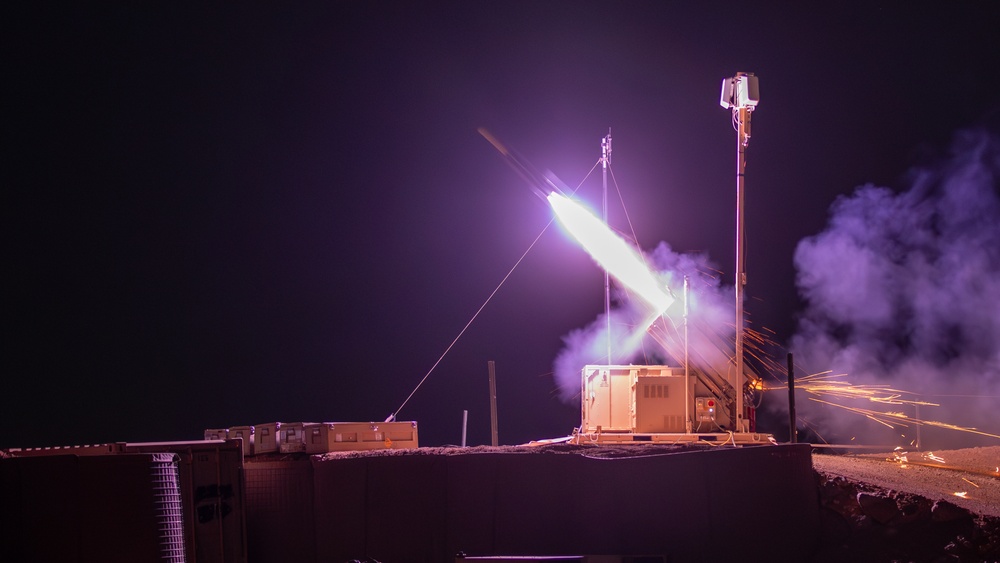
Raytheon Coyote Explained: The Army's Counter-Drone Interceptor and Its Cost Problem
The Raytheon Coyote began in 2014 as a disposable ISR drone. It is now the U.S. Army's primary counter-drone interceptor — fielded in kinetic and non-kinetic variants under a $5 billion contract — and caught in an unresolved cost-exchange equation that defines modern C-UAS.